

method
How Frenchie Method keeps agent work easy to review
Fast agent work is only useful when a human can understand what changed, why it changed, and how it was checked.
AI agents can move through a codebase faster than a human reviewer can reconstruct the conversation that produced the change.
That is the real review problem.
The reviewer does not only need a diff. They need the trail: what the user asked for, what was considered in scope, how the work was supposed to be tested, which checks ran, and which parts still need human judgment.
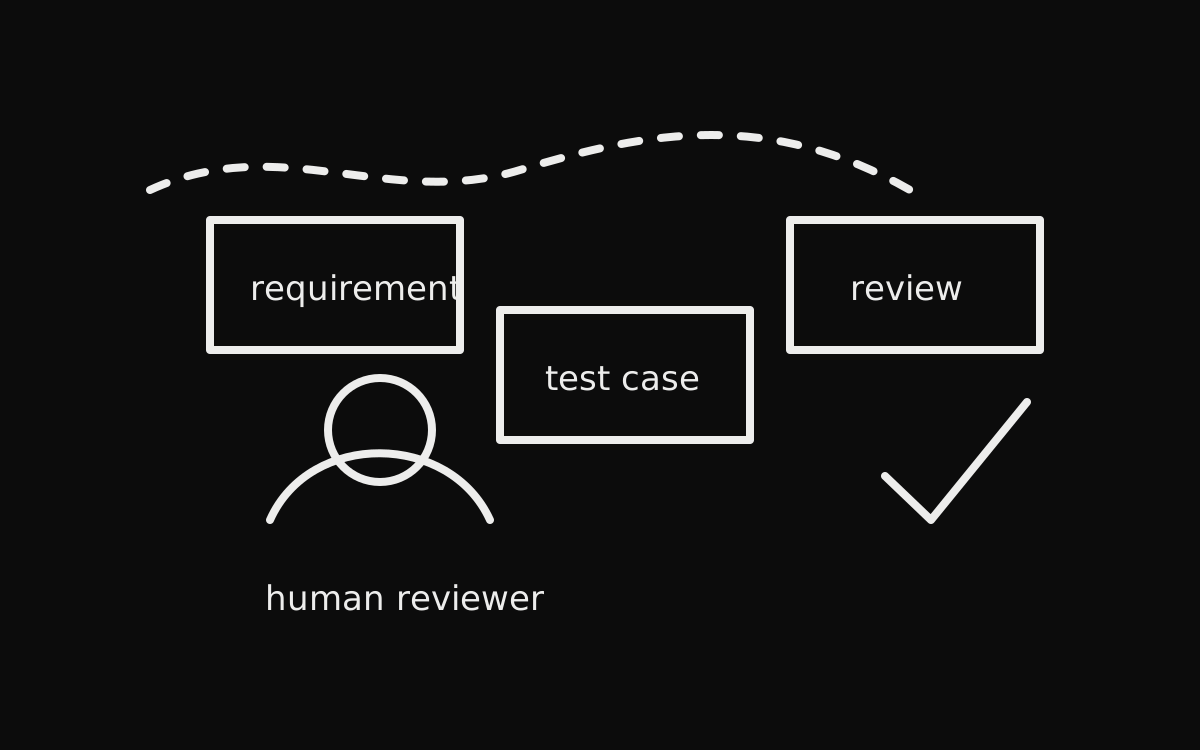
Review starts before the diff
Frenchie Method writes the important steps into .frenchie/docs/feature/[feature-name]/.
The folder is not busywork. It gives the reviewer a short path through the change:
01-requirement.md: what the user asked for02-acceptance-criteria.md: what must be true03-test-case.md: how the work should be proven04-implementation-plan.md: how the agent planned to change the system06-test-report.md: what actually ran08-review-report.md: what deserves another look
That means review does not depend on chat memory.
The review report is not a rubber stamp
Frenchie review starts with the actual result, then checks for artifact drift.
If the implementation solved a slightly different problem, the method does not pretend everything is fine. It asks for a decision:
- update the artifact because the scope changed
- change the implementation back
- split the new work into a follow-up
That is the point. The method is not trying to make the agent look correct. It is trying to make the state of the work visible.
The human still owns the result
Frenchie Method treats the agent as capable, not autonomous.
The agent can gather context, write artifacts, implement, run tests, and prepare the review surface. The human still approves scope, risk, PR creation, release, and cleanup.
Good agent work should feel fast. Good product work should also be inspectable.
That is the balance Frenchie Method is built around.