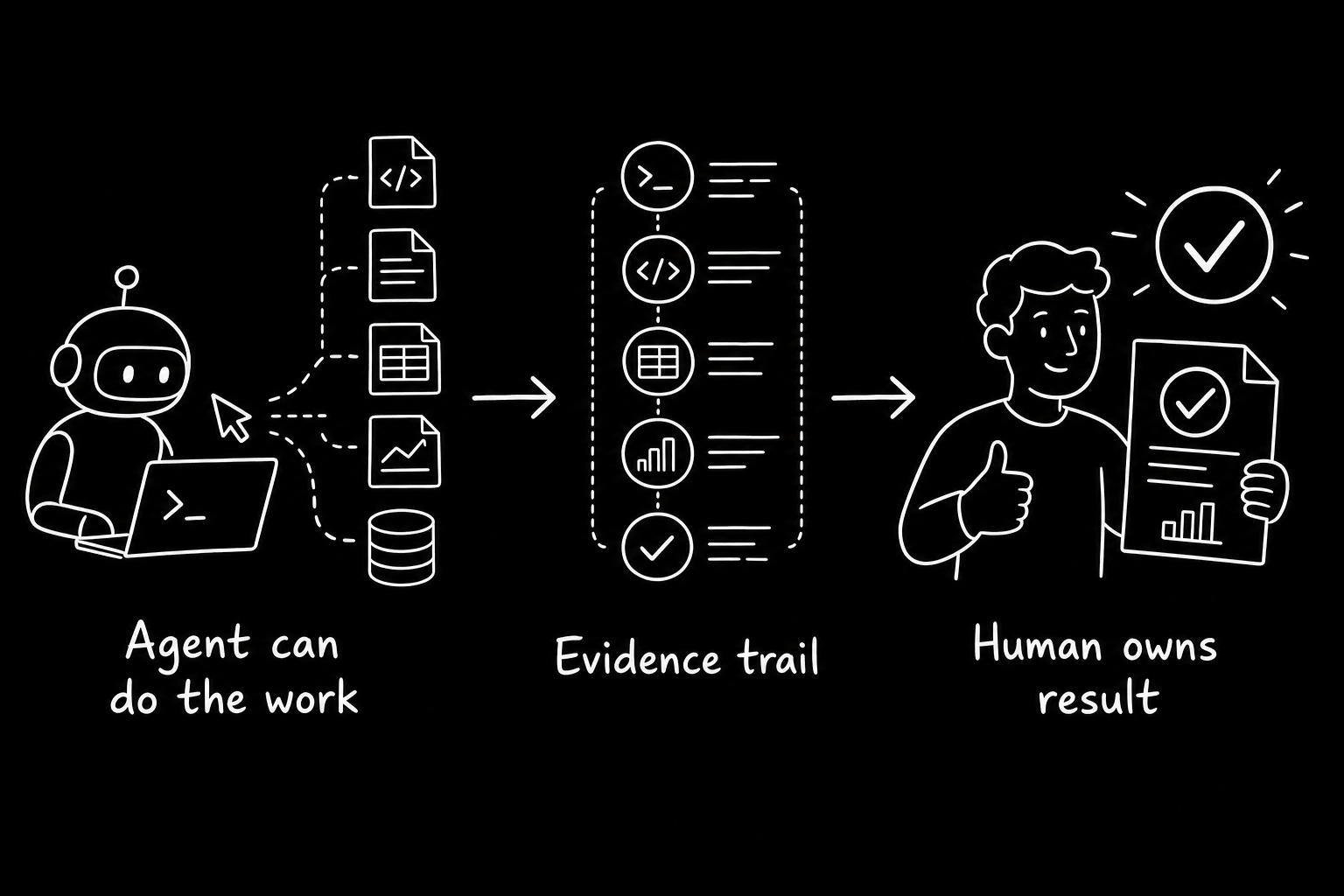
The agent can do the work. The human owns the result.
Frenchie Method treats AI agents as capable teammates, not autonomous owners. The agent can ask questions, write artifacts, implement code, run tests, and prepare reviews. The human still verifies decisions, approves risk, and owns what ships.
The method favors visible artifacts over hidden chat state.
Every important output should be reviewable.
what it is
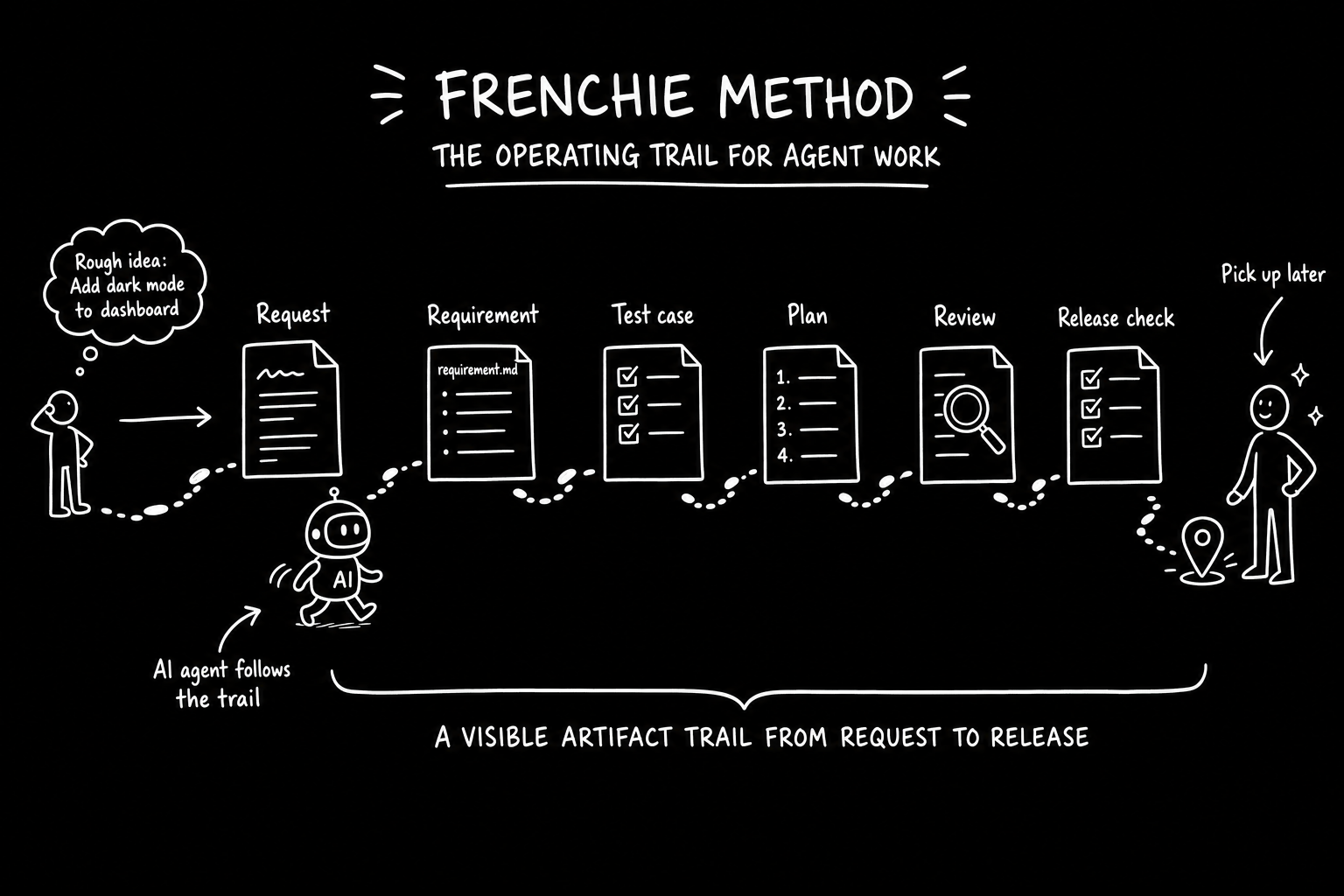
Frenchie Method is the operating trail for agent work.
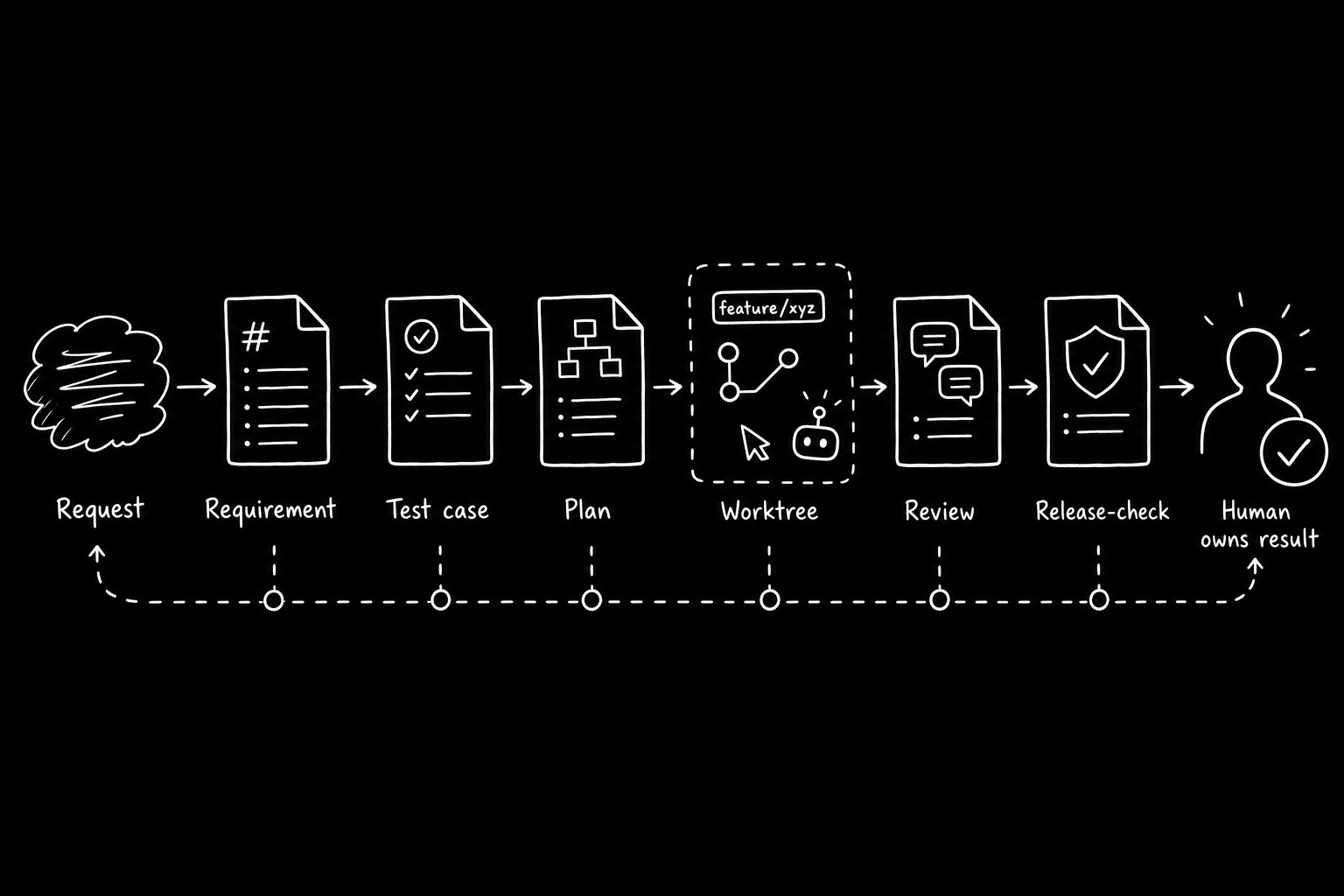
It turns a rough request into requirements, acceptance criteria, test cases, implementation plans, reviews, and release checks. The important part is not the ceremony. It is that another human or agent can pick up the trail later.
what it believes
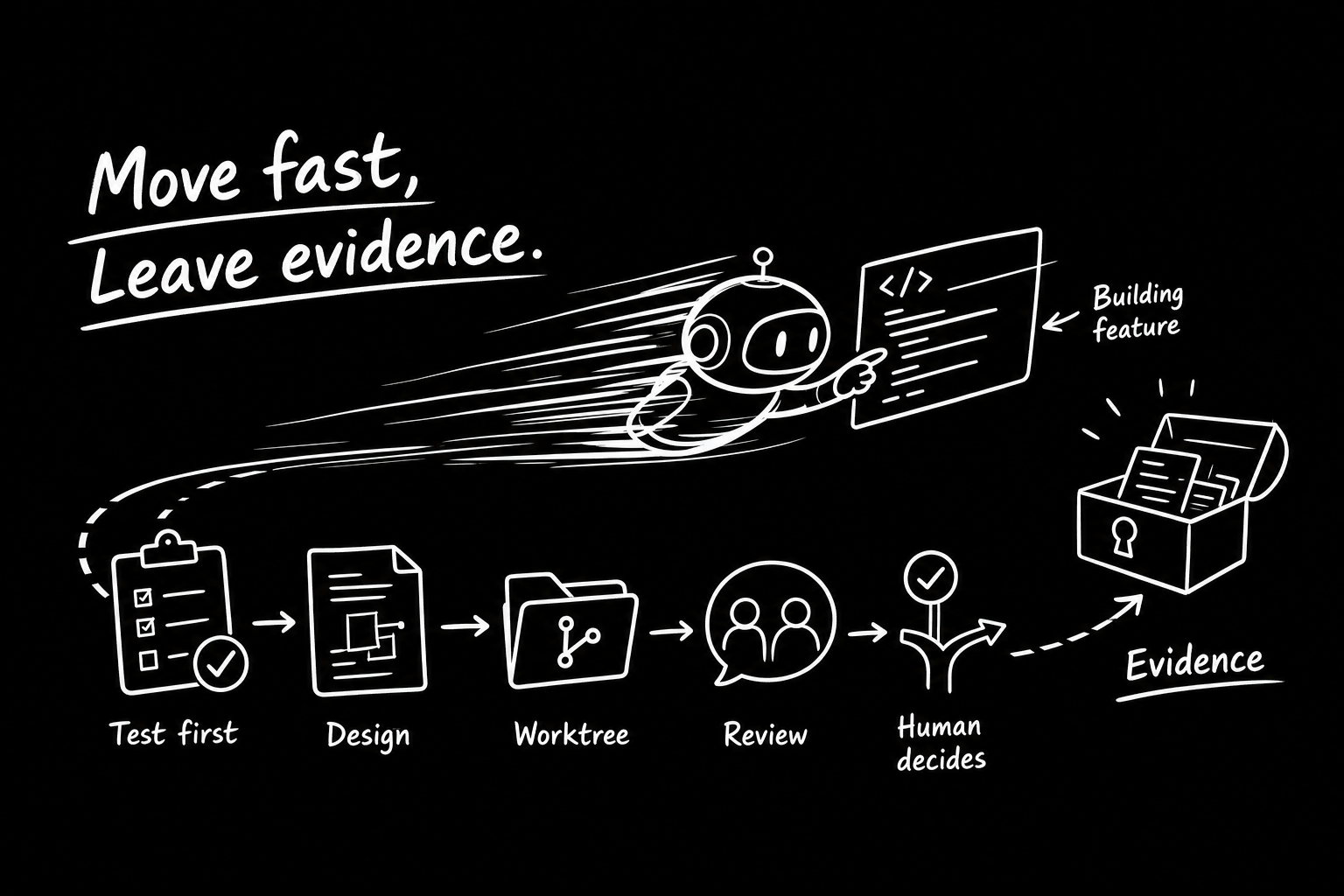
Move fast, but leave evidence.
The principles are simple: write down what matters, test before planning, design before UI implementation, isolate agent work in worktrees, review the result first, and keep release decisions explicit.
why worktrees
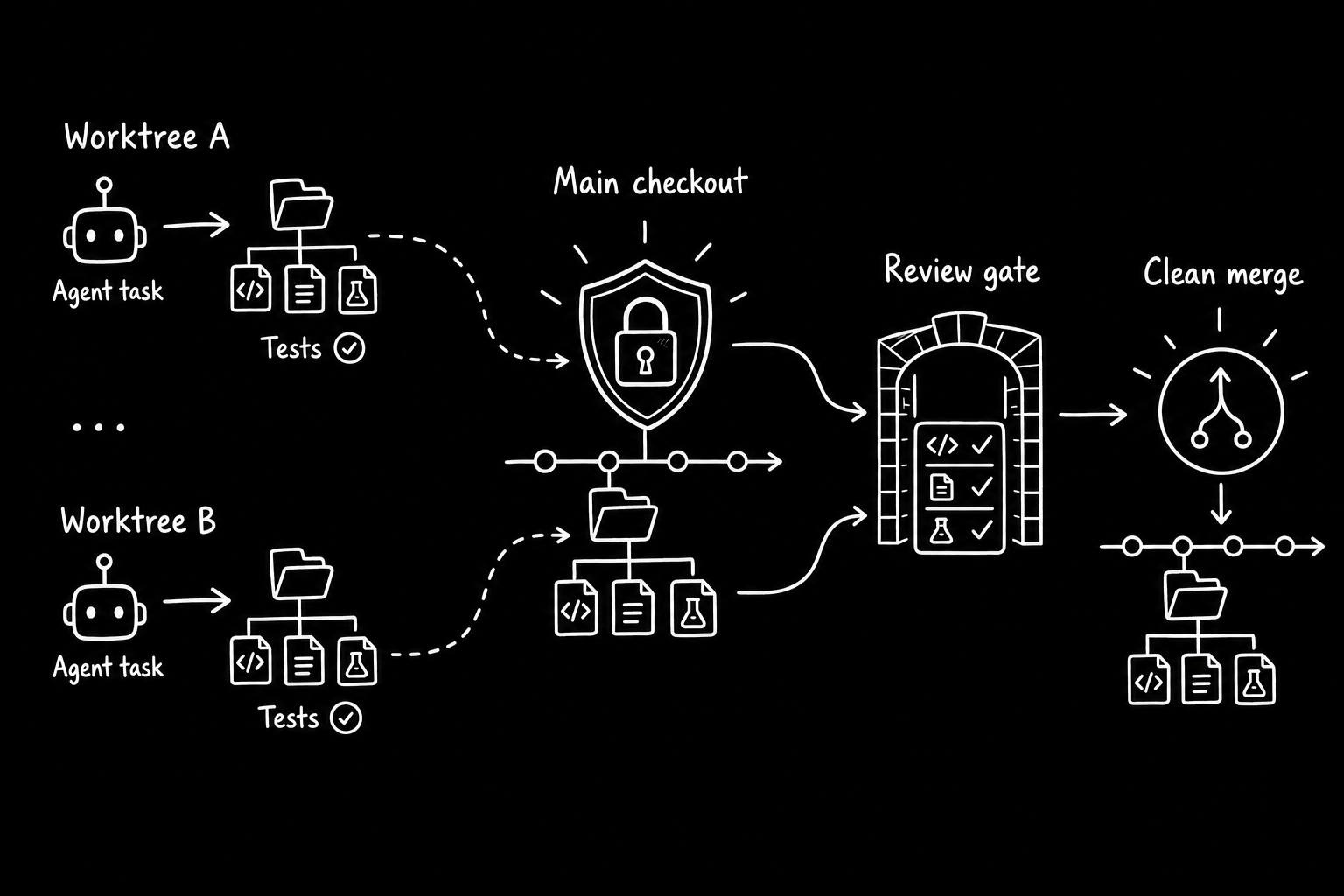
Agents need room to work without contaminating the main checkout.
Worktrees keep parallel tasks isolated, make setup visible, and make cleanup a human-approved step. That is what lets speed feel controlled instead of chaotic.
workflow
A method for speed with evidence.
The principles are easier to follow one decision at a time. Each step keeps agent speed tied to an artifact, a test, a review, or a human approval point.
Prepare requirement
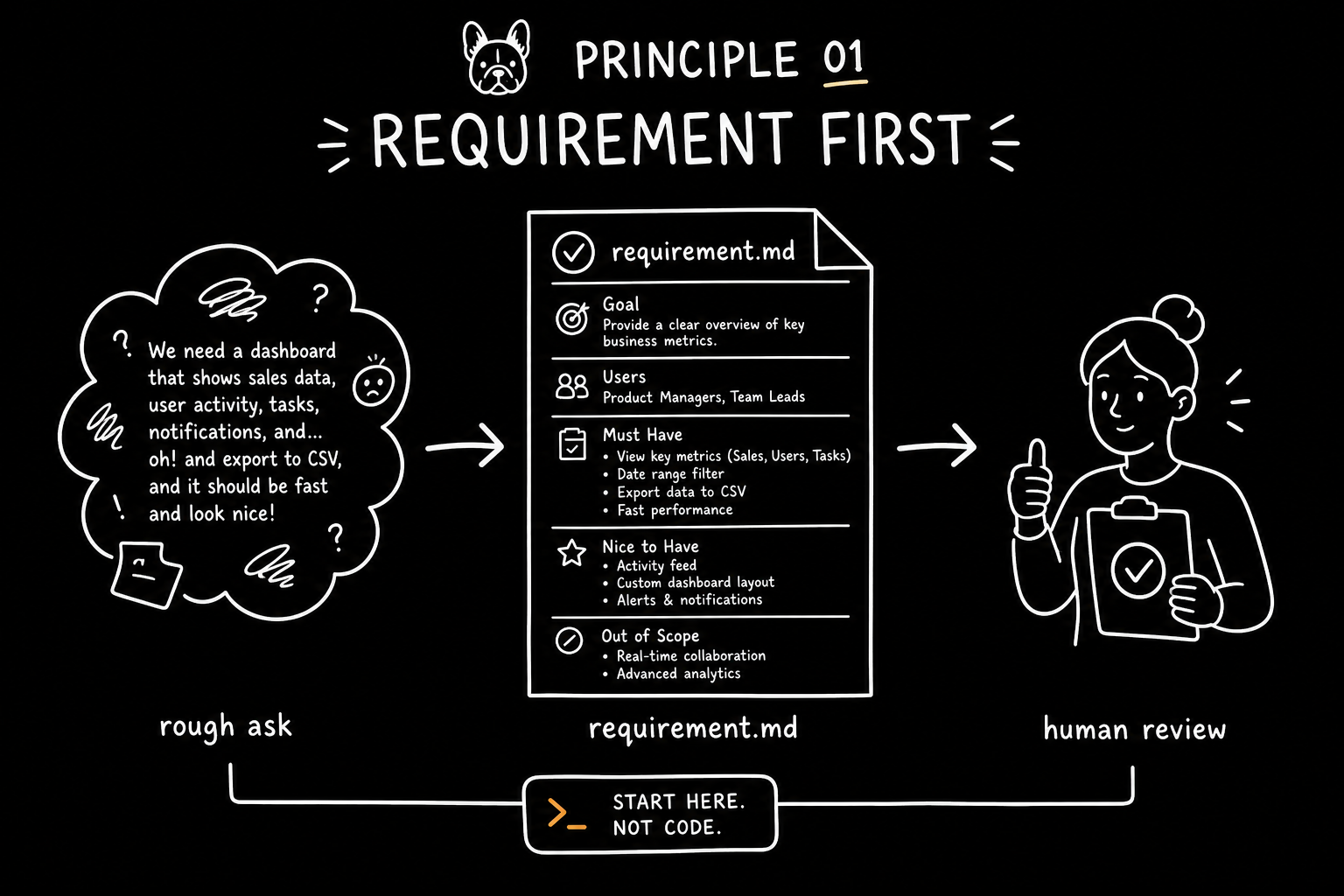
Start with the requirement, not the implementation.
Turn the rough ask into a requirement artifact first.
Most AI-agent rework starts before code exists. Frenchie Method turns the rough request into a requirement artifact the agent can follow and the human can correct.
Write artifacts
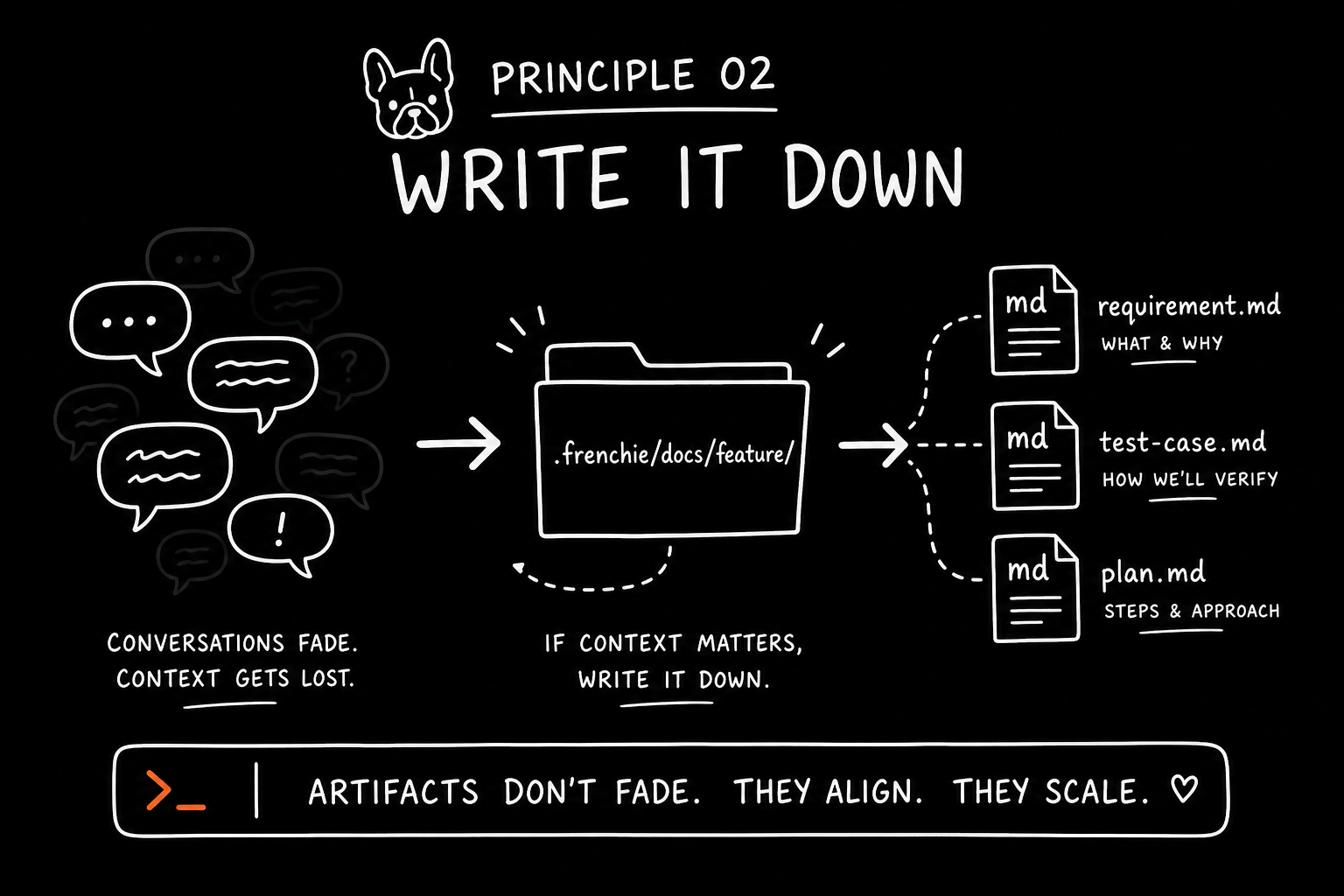
If it matters, write it down.
Move important context out of chat and into files.
Chat is a weak source of truth. Frenchie Method writes important work to .frenchie/docs/feature/[feature-name]/ so another agent, session, or teammate can continue from the same trail.
Design test cases
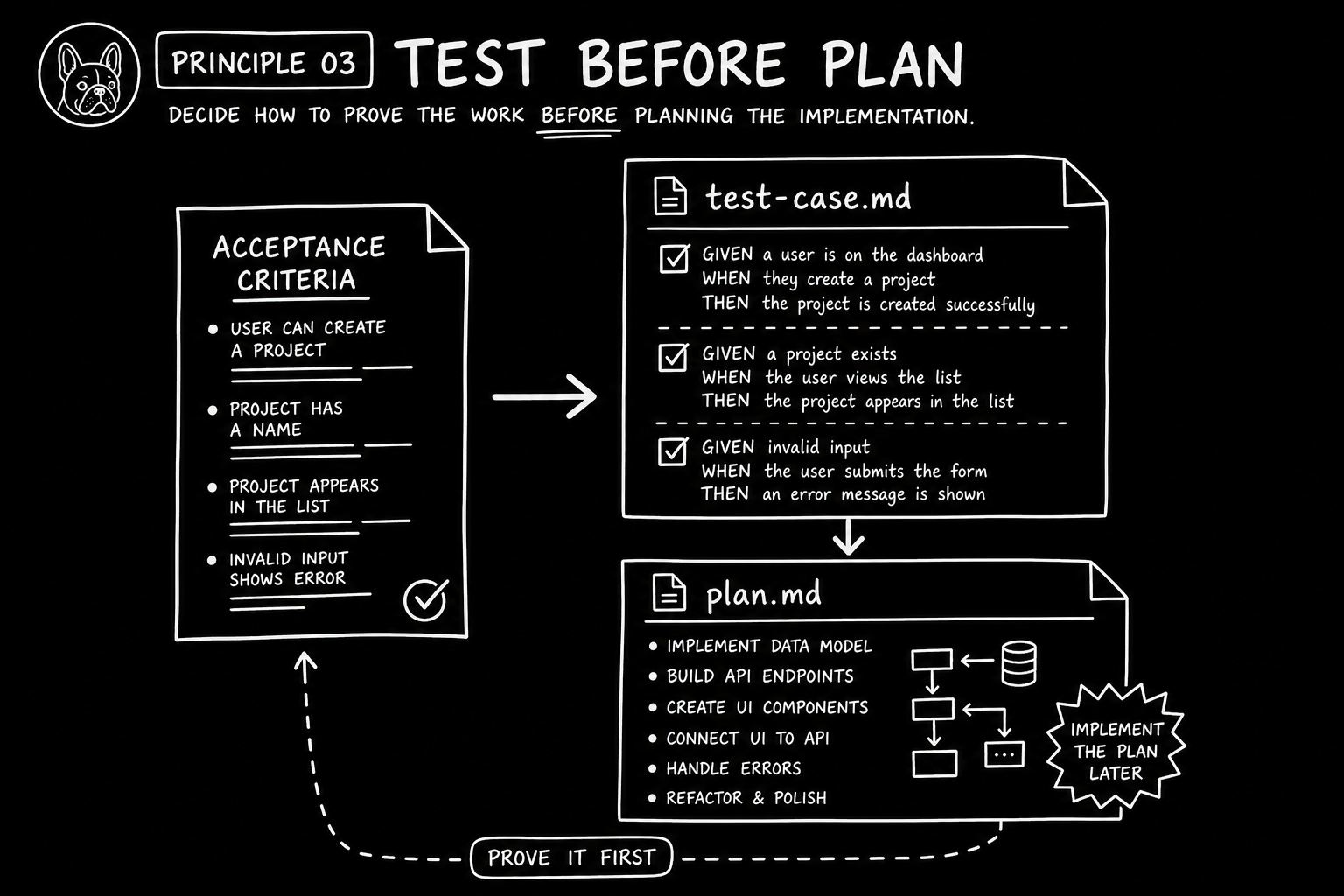
Test cases come before the implementation plan.
Decide how the work will be proven before planning it.
Acceptance criteria describe what must be true; test cases describe how the team proves it. The two are not interchangeable, and Frenchie Method designs test cases before planning the implementation.
Design the UI
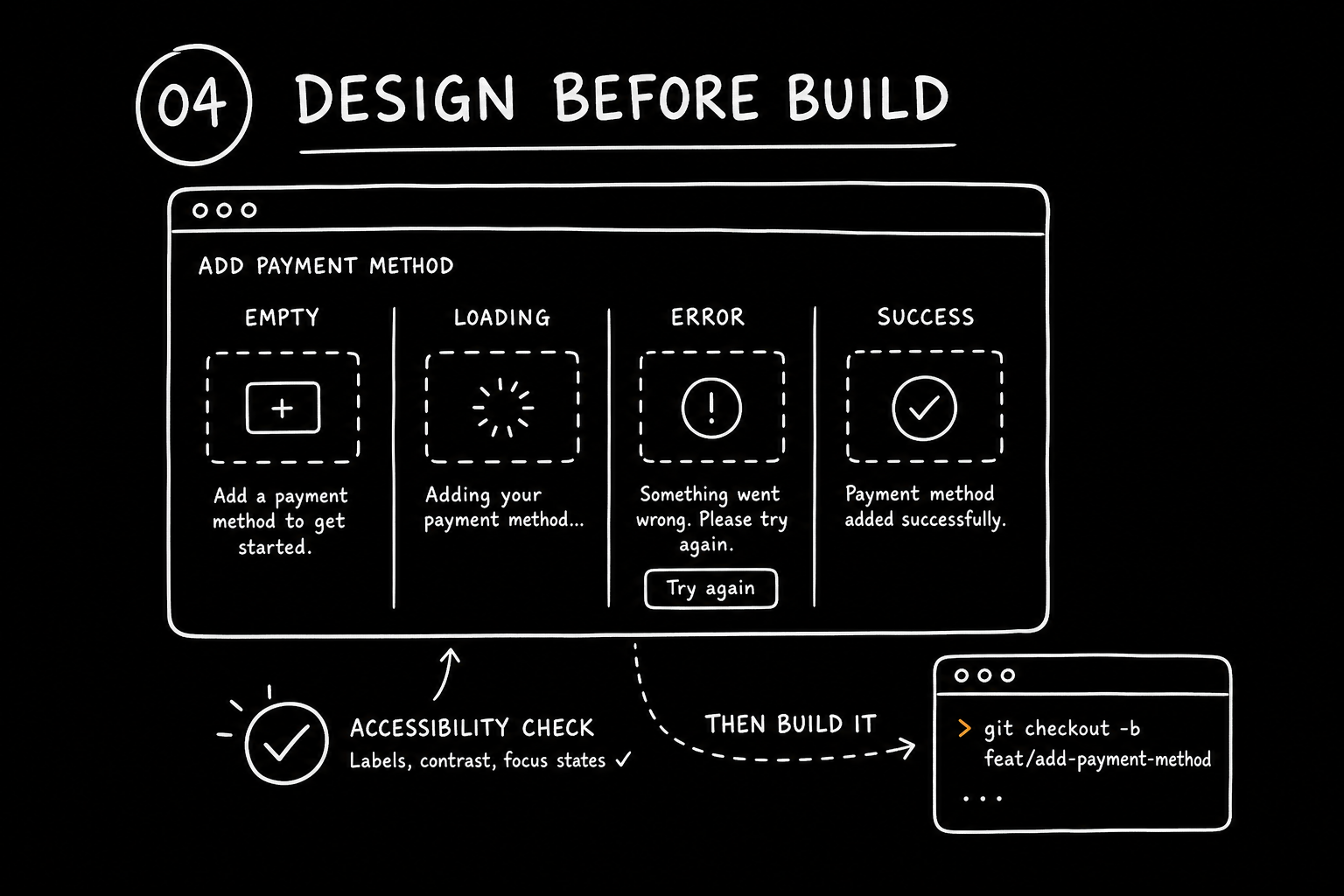
Design the user-facing change before building it.
Shape UI behavior, states, and accessibility before code.
For user-facing work, Frenchie Method captures screen structure, interaction states, accessibility requirements, and wireframe-level decisions before code changes. Design before implementing for UI-heavy work, unless the user explicitly approves skipping the design artifact.
Open worktree
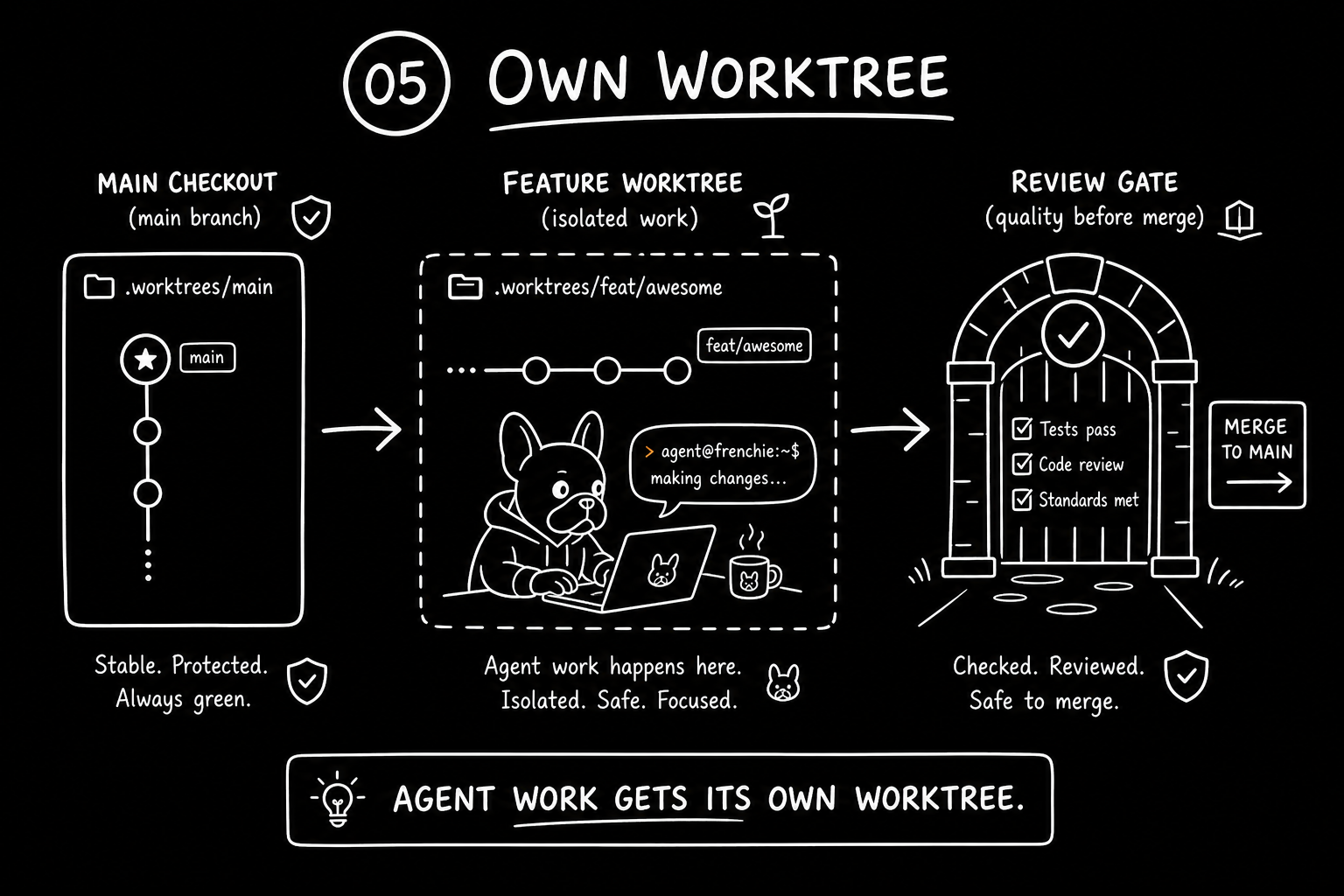
Give agent work its own worktree.
Isolate fast agent work from the main checkout.
AI agents move quickly. Worktrees isolate parallel tasks, preserve the main checkout, and make cleanup explicit. Frenchie expects dependency bootstrap, warns about ignored and generated local state, and performs no silent cleanup.
Review result
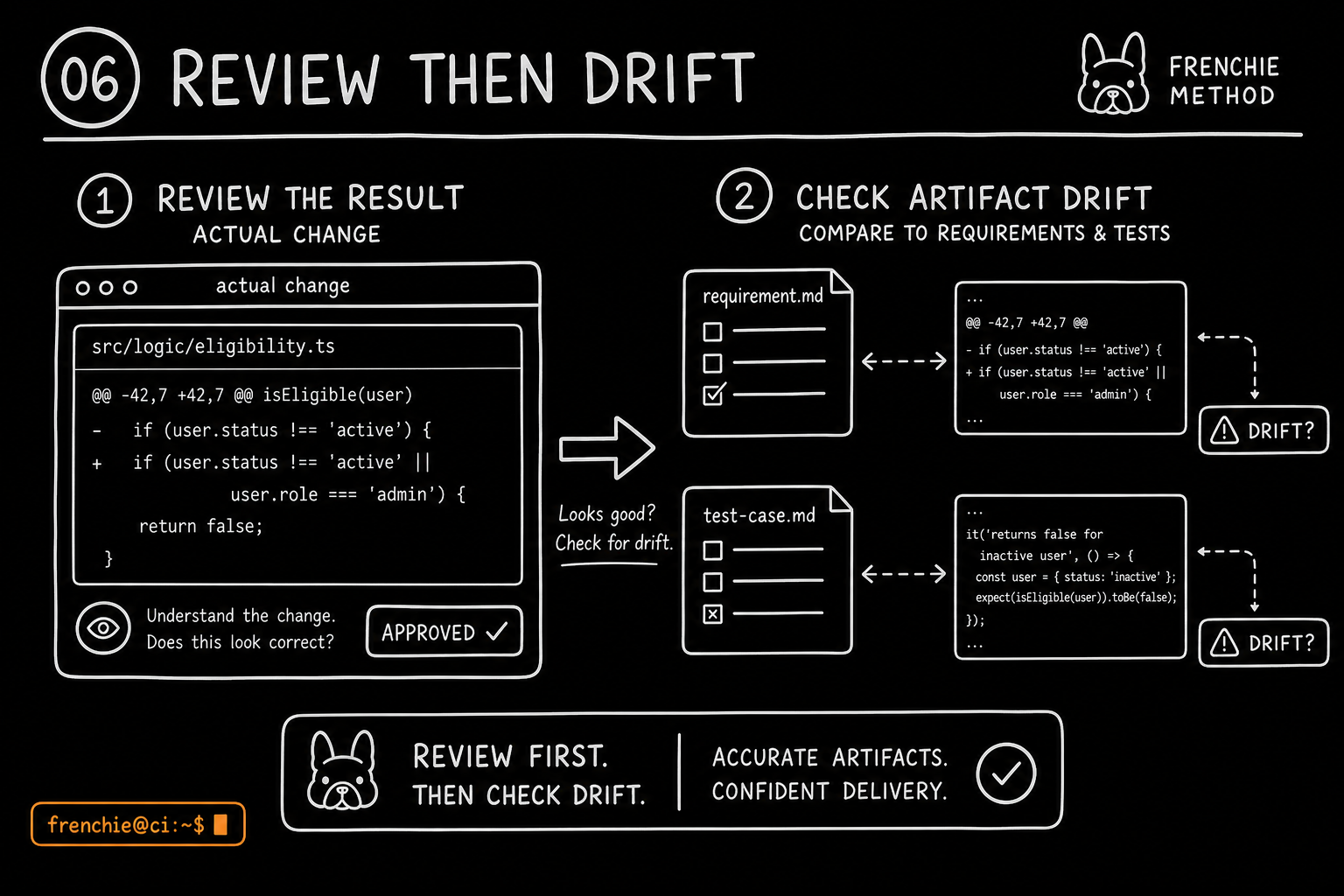
Review the result first. Then check artifact drift.
Inspect from the user's point of view, then compare the diff against the artifacts.
Review happens in two stages. /walkthrough inspects the result from the user's point of view — acceptance criteria, states, copy, data behavior, and error paths. /pr-review then compares the diff against the artifacts to surface drift, regressions, and missing tests. The two are distinct on purpose: a walkthrough catches what the user would notice; a diff-vs-artifacts review catches what reviewers and future maintainers would.
Review security
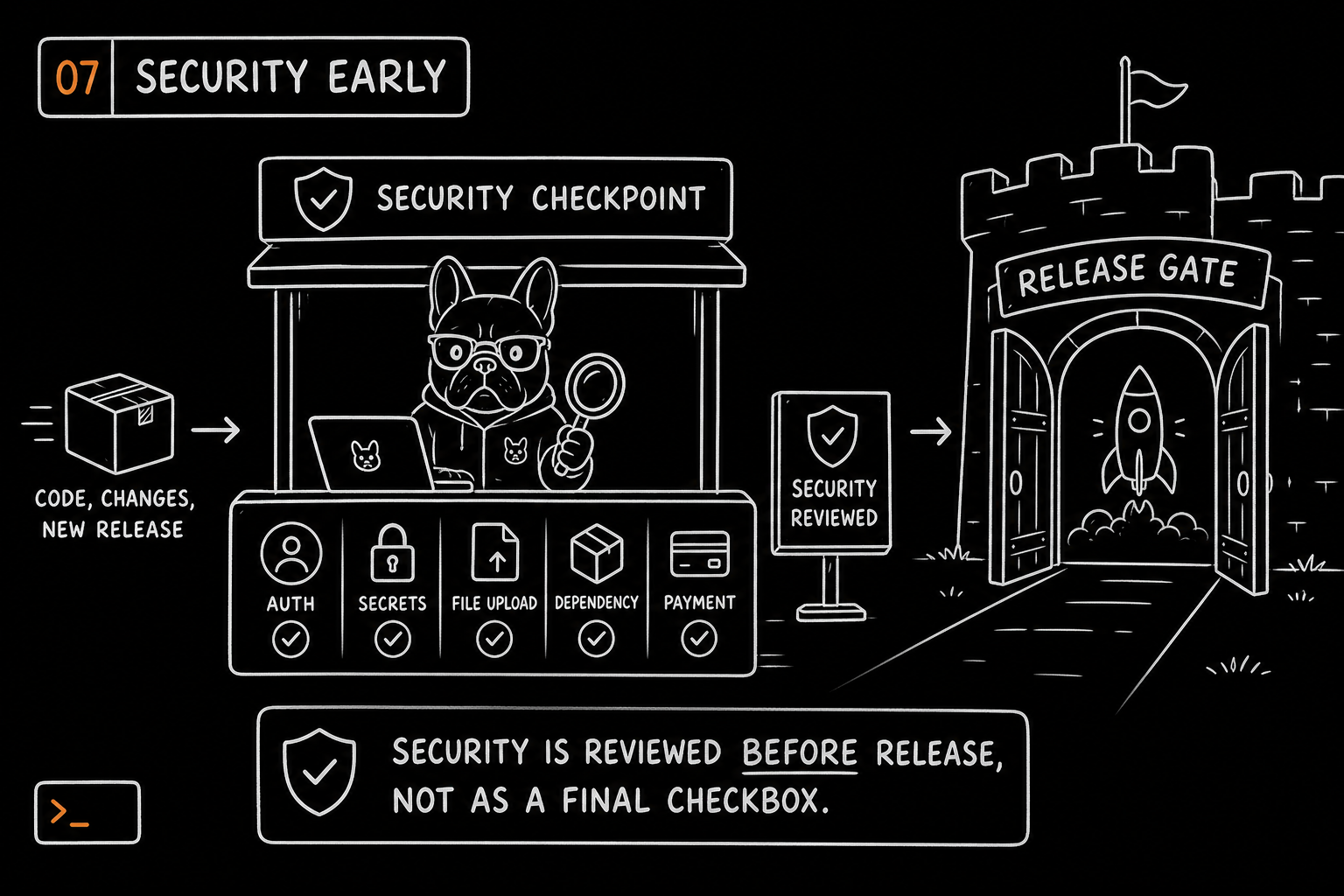
Security is not a final checkbox.
Review risky surfaces before release, not after implementation.
When auth, data handling, payments, secrets, file parsing, dependencies, or production behavior are affected, security review belongs before release.
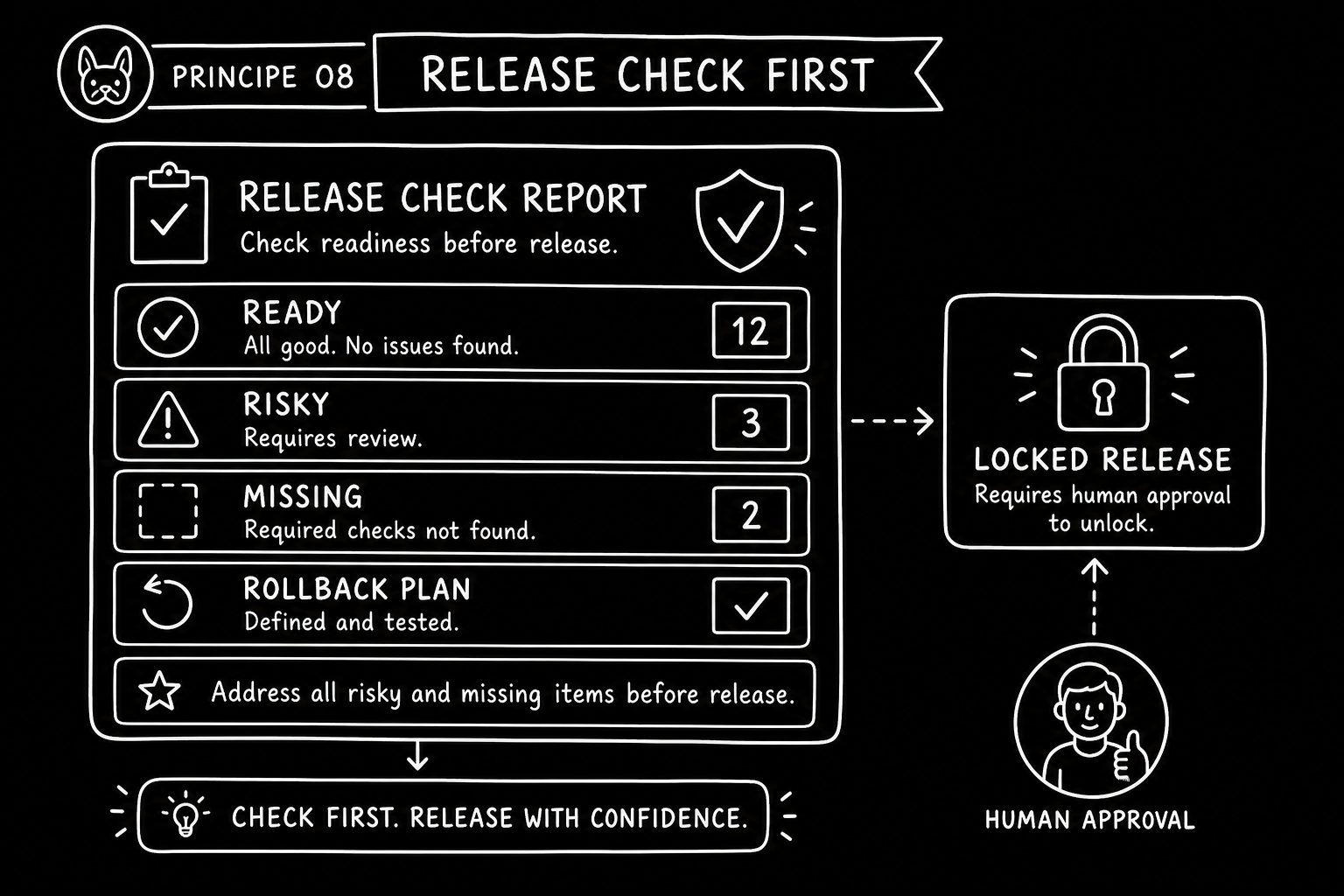
Check readiness
Check readiness before release.
Report readiness, risk, missing evidence, and rollback notes.
/release-check reports what is ready, risky, missing, and worth double-checking. /release is separate and only runs when the user explicitly asks and approves.
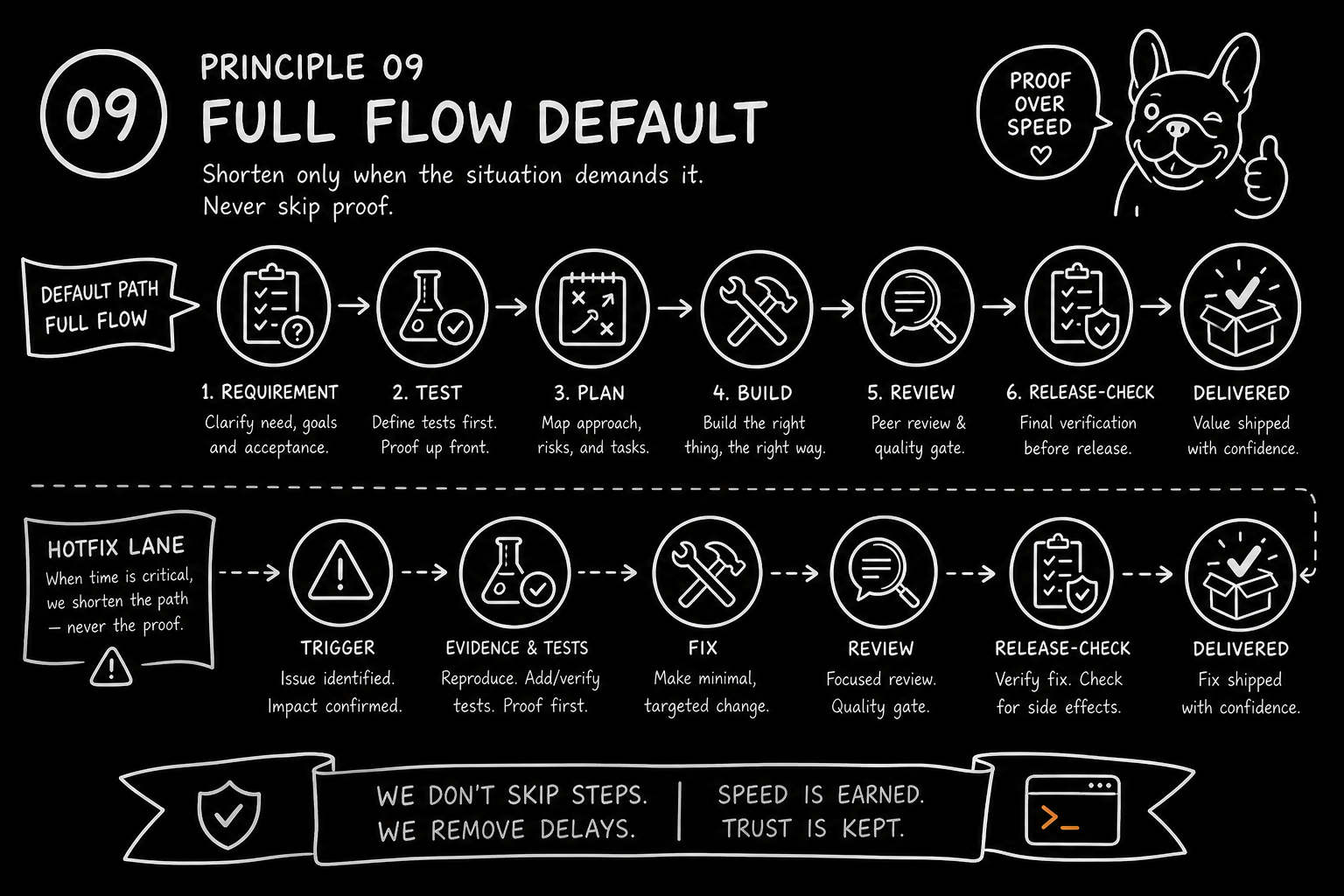
Keep full flow
Use the full flow by default. Shorten only when the situation demands it.
Hotfixes can compress the flow, but not skip proof.
Hotfixes can use a compressed path, but they still need reproduction, impact, fix evidence, tests, release-check, and a postmortem when users were affected.
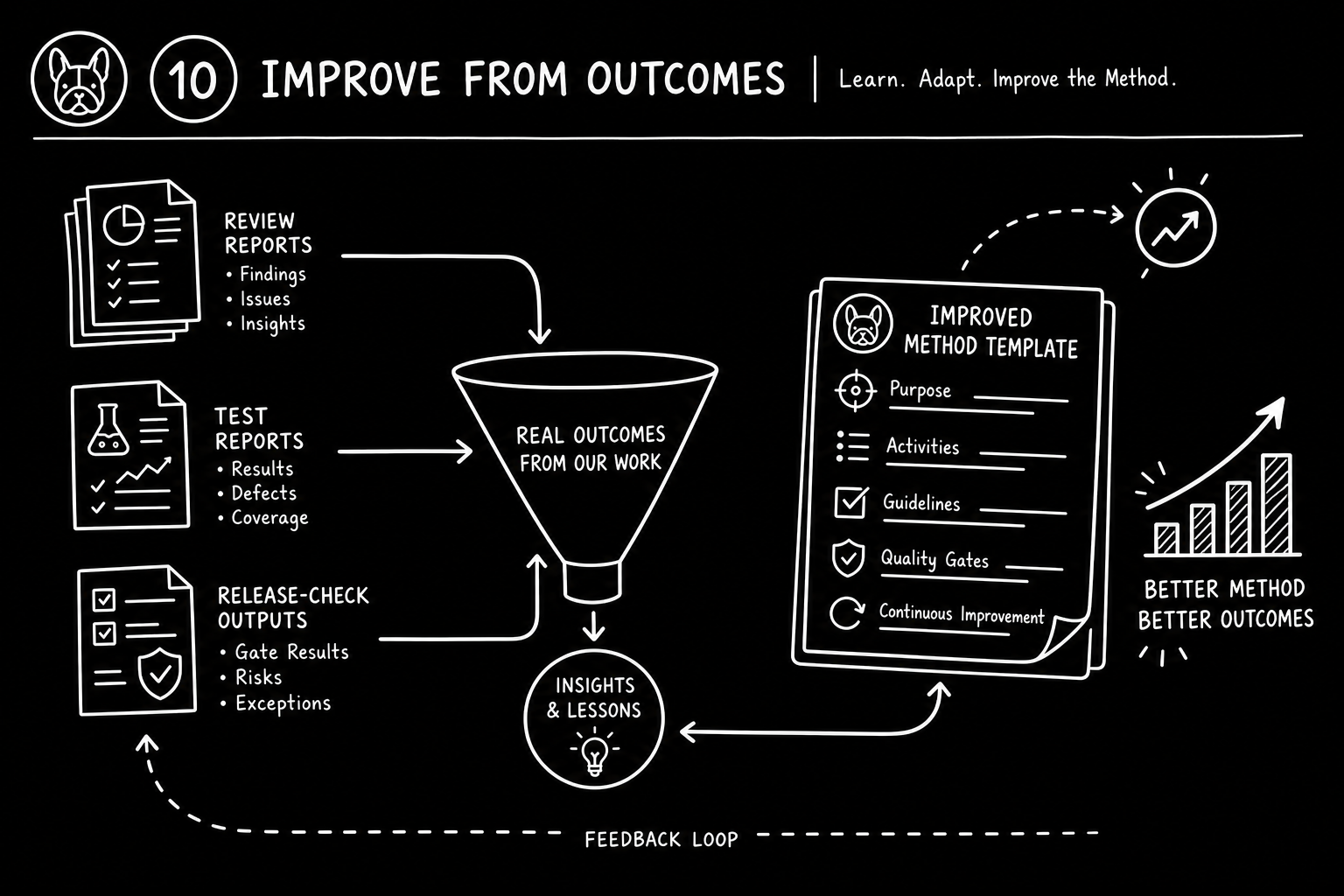
Improve method
Tune the method from real outcomes.
Use reports and retrospectives to tune the method.
The artifact trail helps teams see where work gets stuck, where agents help, which checks catch real problems, and which prompts or templates need improvement.
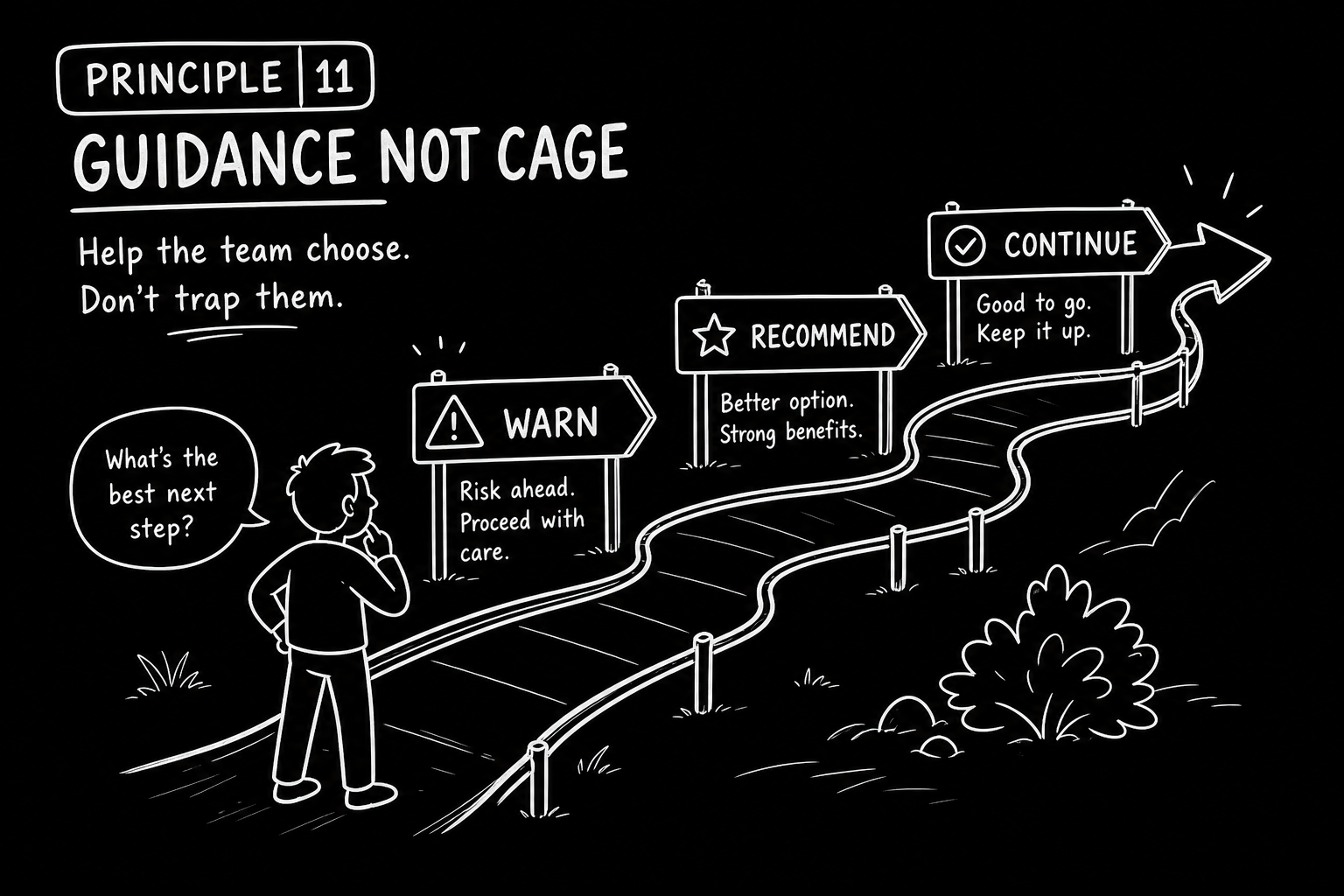
Guide choices
Guidance should never feel like a cage.
The workflow should guide, warn, and continue when humans choose.
The orchestrator can be strict, but direct skill mode should help with the task at hand, warn when artifacts are missing, recommend the safer next step, and continue when the user chooses.
release boundary
/release is not part of the automatic flow. It remains explicit and user-approved.
artifact folder preview
If it matters, it gets a file.
Feature artifacts live under .frenchie/docs/feature/[feature-name]/. Teams decide what to commit and what to ignore.
Frenchie Method is a structured workflow for AI-assisted product development. It helps agents and humans move from requirement to release through shared artifacts, test cases, implementation plans, reviews, and release checks.
Who is Frenchie Method for?
It is for solo builders, founders, small product teams, engineering leads, and anyone who wants AI-agent work to be traceable, testable, and reviewable.
Is Frenchie Method only for teams?
No. It helps solo builders because the artifact trail keeps work recoverable across sessions, context resets, branches, and handoffs.
Does Frenchie Method replace my AI coding agent?
No. Frenchie Method gives your agent a workflow to follow. You keep using your preferred agent, repository, issue tracker, and review process.
Does Frenchie Method require Frenchie Kit credits?
No. Text-only Method workflows are free and do not require an API key. Frenchie Kit credits are used when hosted file parsing or generation capabilities are needed.
Why does Frenchie Method write artifacts?
Artifacts keep important context out of fragile chat history. They make requirements, test cases, plans, reviews, and release checks reusable by humans and agents.
Why does Frenchie Method use worktrees?
Worktrees let AI agents work in isolated checkouts so parallel tasks do not contaminate the main repo or each other.
Why do test cases come before implementation plans?
The plan should be shaped by evidence. Test cases define how the team proves the work, so the implementation plan can build around that proof.
What is the difference between /release-check and /release?
/release-check reports readiness and risk. /release is a separate explicit command that may merge or release only when the user asks and approves.
Can I skip steps for a hotfix?
Yes, but only with enough evidence to protect users: reproduction, impact, fix, tests, release-check, and a postmortem when production was affected.
What happens if the code no longer matches the artifacts?
Frenchie Method calls out artifact drift. The human can update the artifacts, change the implementation back, or treat it as a scope change and rerun affected steps.
How does Frenchie Method handle security review?
The workflow considers security throughout and triggers review when risky areas such as auth, data, secrets, files, dependencies, or production behavior are affected.
Can I use one Method skill without running the whole workflow?
Yes. Direct skill mode should help with the current task, warn when Method artifacts are missing, recommend the safer next step, and continue if the user chooses.