

method
Why test cases come before implementation plans
Frenchie Method asks for proof before planning the code change, because the plan should be shaped by how the team will verify it.
Most implementation plans sound confident.
That does not mean they are testable.
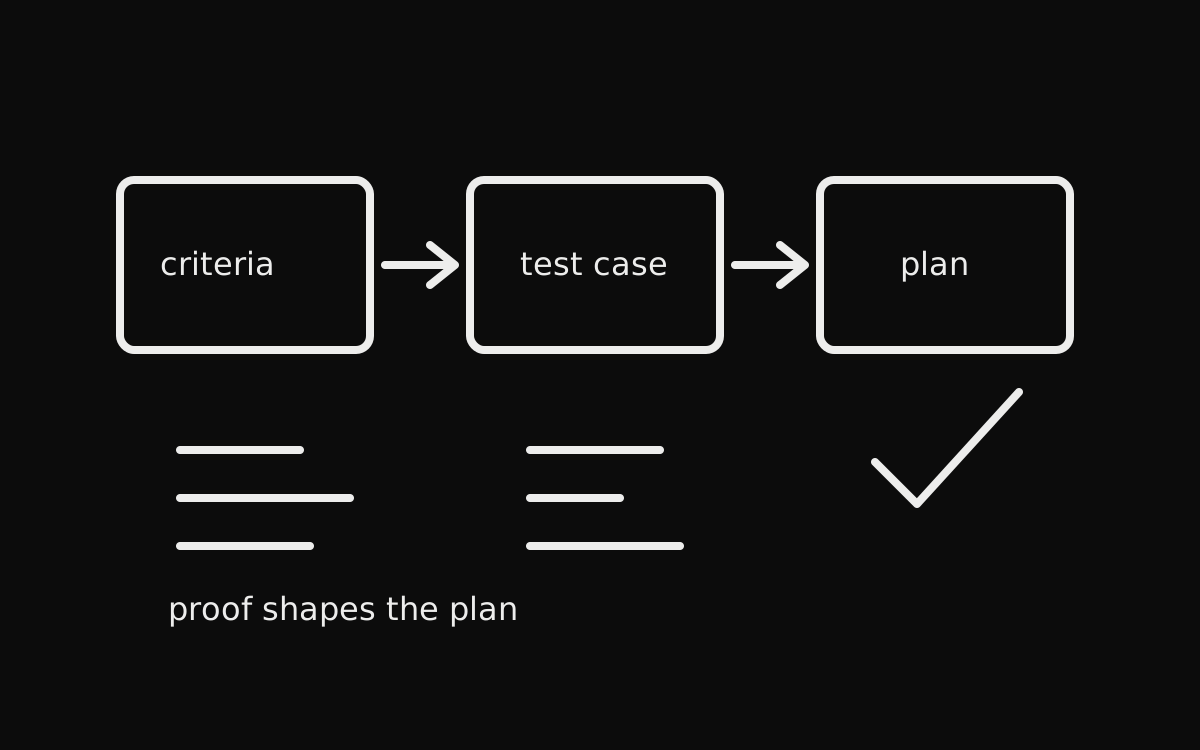
Frenchie Method puts test cases before the implementation plan because the plan should be shaped by proof. Before the agent decides how to change the code, it should know how the work will be checked.
Acceptance criteria are not test cases
Acceptance criteria describe what must be true.
Test cases describe how to prove it.
Those are related, but they are not the same. "Users can upload a DOCX file" is an acceptance criterion. A useful test case says what file to use, what response to expect, what edge case matters, and whether the proof is automated or manual.
That difference matters more when an agent is doing the work. Without test cases, the agent can write a beautiful plan that never names the risky behavior.
Tests make the plan smaller
Good test cases reduce wandering.
They help the implementation plan answer practical questions:
- Which behavior is actually in scope?
- Which edge cases should be handled now?
- Which existing tests should change?
- Which manual checks are acceptable?
- What should the review report point at?
The result is not slower work. It is less rework.
The plan becomes evidence-aware
Frenchie Method does not require every change to have perfect automated coverage. It does require the agent to say how the work was proven.
Sometimes that is a unit test. Sometimes it is an integration test. Sometimes it is a manual browser walkthrough with screenshots and logs.
The important part is order: proof first, plan second, implementation third.
That order keeps the agent from planning around vibes.