

method
Why Frenchie Method uses worktrees
Worktrees give fast agent work a clean place to happen, so parallel tasks do not contaminate the main checkout.
AI agents are good at moving.
That is useful until two tasks touch the same checkout, generated files pile up, local state becomes unclear, and nobody knows which branch owns which change.
Frenchie Method uses worktrees because fast work needs a clean boundary.
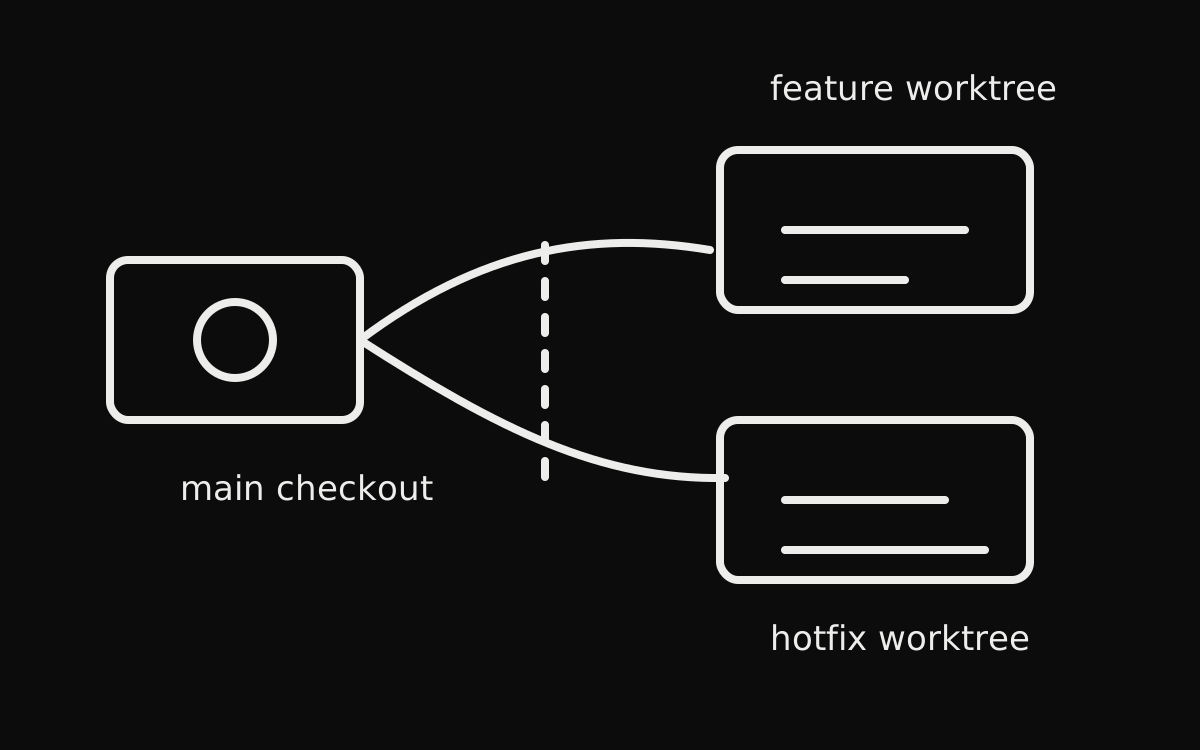
A worktree is a room, not a ritual
The goal is simple: give the agent its own checkout.
That lets the main repo stay stable while the agent installs dependencies, generates files, runs tests, and edits code. It also makes cleanup explicit. Frenchie Method should never quietly delete local state because an agent decided it was done.
Parallel work stays readable
Without worktrees, parallel agent tasks can blur together:
- one task changes generated files
- another task updates dependencies
- a third task edits the same component
- the human opens the repo and sees a mixed diff
With worktrees, each feature has its own space and its own artifact folder.
The reviewer can ask a better question: does this worktree solve this feature?
Cleanup remains a human decision
Frenchie can suggest cleanup. It can warn about generated state. It can point to the branch, artifact folder, and test evidence.
But release and cleanup stay explicit.
That is the theme across Frenchie Method: move quickly, keep boundaries visible, and leave the final decision with the human who owns the product.